
Be thankful, grateful, patient, charitable, kind, and don’t forget to smile, as it is infectious. God Bless America and Protect Our Military!
Though now a retiree, I was in the food service industry for 42 years, and the only thing I can think of that was more impacted than them would probably be the shipping and receiving goods at our ports, although most businesses today are automated in some capacity, replacing their workforce. We are quickly becoming a nation of part-time workers in the new, developing, automated world. Read on
We now live in an era characterized not only by advancements in robotics but also by significant developments in artificial intelligence. These technologies are progressing rapidly, thanks in large part to improvements in supercomputers and related technologies.
Most people are familiar with self-checkouts and automated car washes, which are examples of tasks that require minimal human interaction. Many companies are implementing these solutions in their workforces.
The COVID-19 pandemic has further accelerated this trend by introducing new ways to conduct business and facilitate remote learning for our children through platforms like Zoom. As a result, many activities now take place on laptops or tablets from home. This shift has allowed companies to save millions in operational costs associated with maintaining physical office spaces, as business can often be conducted remotely—from home or even from the beach, for that matter.
Our biggest concerns today revolve around the jobs of the future. We need to ask ourselves what type of world our grandchildren will grow up in during this new technological age. AI and robotics have advanced to the point where systems can mimic, or even replace, the need for human interaction in both the private and military sectors. The only real need for human interaction will be in programming or maintenance. This reliance on technology may be short-lived once these systems achieve sufficient AI capabilities and can operate as functioning robots programmed to perform a variety of tasks. For businesses, the appeal of using robots lies in the potential for greater profits, as they no longer need to pay salaries, health benefits, vacation time, maternity leave, or paid medical leave. Once programmed, robots can work 24/7, every day of the year.
I know this all sounds like something out of a Sci-Fi horror movie, but if we don’t monitor serious checks and balances, we may all be working for them someday. Unfortunately, if you look at robotics, which has already been used in shipping, receiving, and automating in the world around us, you will soon realize that some of us are already quickly becoming last year’s model. I remember a time with my company when I was first hired to do a job at the corporate office in the early 90’s.
Over the next sixteen years, the whole company merged twice, with each time more local jobs in IT, Systems, Customer Service, and Programming functions were shrinking and outsourced to other controlling locations out of state. The bottom floor of our office was predominantly dominated by computer systems users and developers. When I left sixteen years later, they rented half the building and retained only two people to support programming and system setups. Customer service was outsourced for the most part overseas.
I remember seeing a discussion between Elon Musk and the Saudi Crown Prince. The prince asked Elon where he saw the future of business heading, particularly concerning the need for manpower. After a moment’s thought, Elon responded that AI and robotics would eventually replace much of what humans currently do. He added that nations would need to devise a way to subsidize their citizens, perhaps through a form of credit card, a computer-generated salary, or other digital income, such as cryptocurrency like Bitcoin, which would allow people to buy or trade goods. He added that the trades will always be needed.
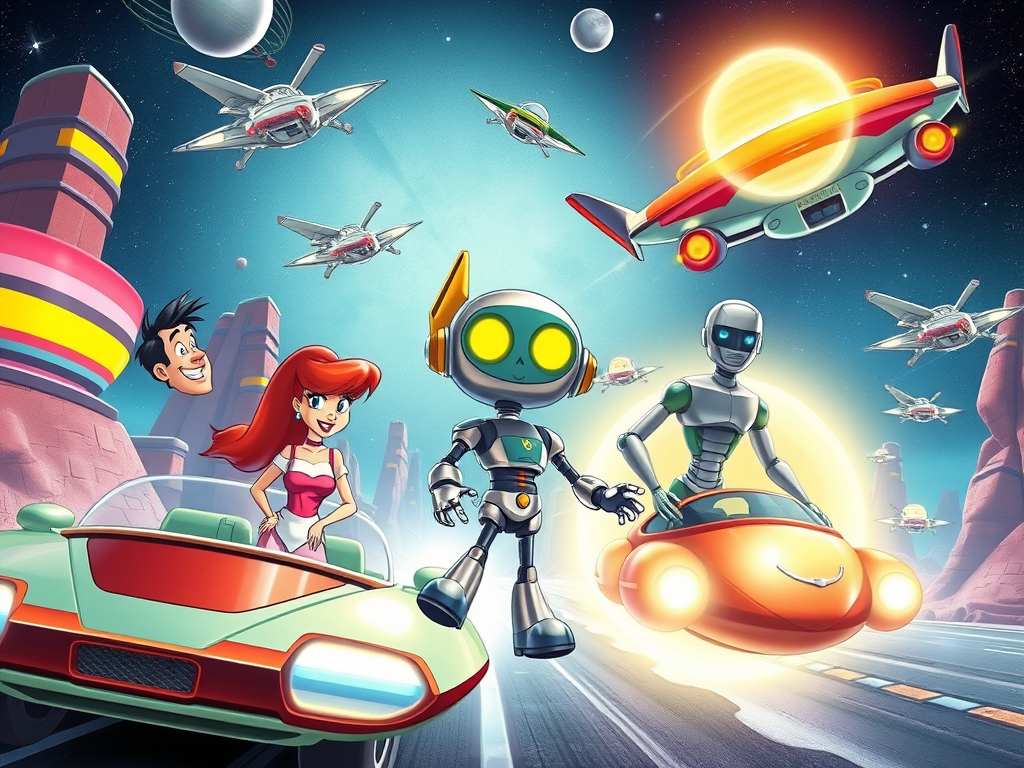
Point to Ponder: This leads me to wonder what or who determines or separates the classes of workers, and how that rule applies to the less fortunate, less educated, and less talented? Are we/they all going to become misfits in the new world eventually? Or perhaps we will be like the Eloi in the book, The Time Machine, or like Sylvester Stallone and Sandra Bullock in the movie, Demolition Man. Either way, it all seems so Dystopian and something out of the comic books from my youth in the 5o’s and 60’s. Maybe George Orwell wasn’t too far off the mark after all. Well, George Jetson, here we come!


Leave a comment